A well-designed user experience (UX) plays a pivotal role in driving engagement for financial applications. When users encounter intuitive interfaces, streamlined workflows, and visually coherent layouts, they’re more likely to trust the app with sensitive financial data and interact with it regularly. Good UX reduces friction, making complex financial tasks—like tracking expenses, executing trades, or managing budgets—feel effortless. For instance, features like contextual help, instant feedback, and predictive inputs can drastically improve task completion rates and minimize user drop-offs.
The Exness app is a strong example of how effective UX design can enhance user engagement in the financial sector. By offering a seamless onboarding process, real-time account insights, and an uncluttered interface, it allows users to focus on decision-making rather than navigating technical obstacles. Its responsive performance and well-thought-out information hierarchy cater to both novice and experienced users, encouraging consistent use. Ultimately, when a financial app feels easy, secure, and helpful, users are more likely to return, explore more features, and even recommend it—showing the direct impact of good UX on engagement.
Definition of Good UX
Good User Experience (UX) refers to the overall quality of interaction a user has with a product, system, or service—particularly in terms of how easy, intuitive, efficient, and satisfying it is to use. In digital products like websites or mobile apps, good UX means designing the interface and user journey in a way that meets the user’s needs with minimal friction while also delivering value in a clear and accessible manner.
Key characteristics of good UX include:
- Usability: The product is easy to navigate and understand.
- Functionality: All features work reliably and support the user’s goals.
- Accessibility: Users of varying abilities can interact with the system effectively.
- Consistency: Design elements behave predictably across the interface.
- Feedback and responsiveness: The system clearly communicates what is happening (e.g., confirmations, error messages).
- Aesthetics: Visually appealing design that enhances, rather than obstructs, usability.
Importance of User Engagement in Financial Apps
User engagement is critical to the success of financial apps because it directly influences user retention, trust, and lifetime value. Unlike entertainment or social platforms, financial apps handle sensitive, high-stakes interactions—such as savings, investments, and payments—which means users must feel confident, informed, and in control every time they open the app. High engagement often signals that users find the app reliable, easy to use, and genuinely helpful in managing their financial lives.
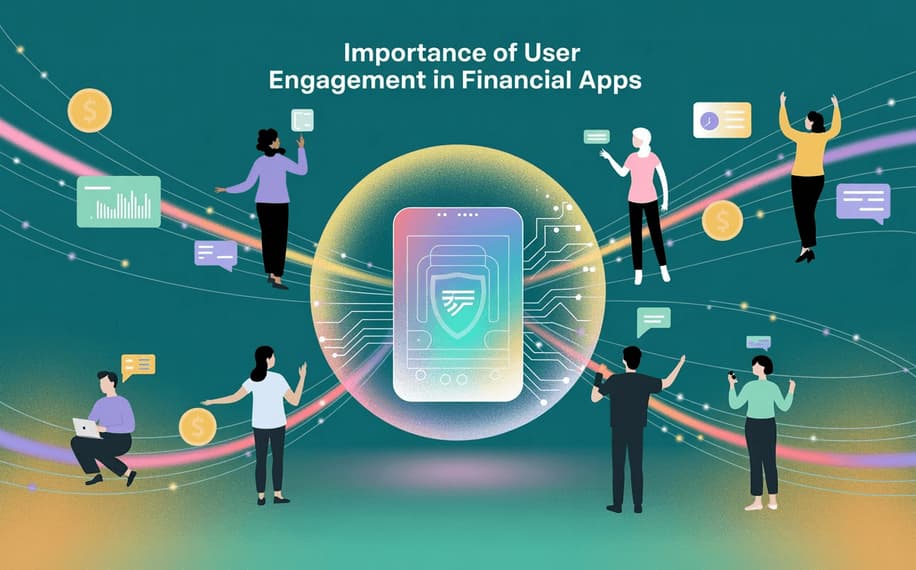
Moreover, engaged users are more likely to explore additional services such as loans, investments, or premium features, contributing to monetization and brand loyalty. Frequent interactions also provide valuable behavioral data that financial institutions can use to personalize services, improve features, and anticipate user needs. In a competitive fintech landscape, where switching costs are low and alternatives are plentiful, maintaining strong user engagement is not just beneficial—it’s essential for long-term growth and differentiation.
Benefits of Good UX Work with Financial Apps
Here are Benefits of Good UX work with Financial Apps:
Enhanced User Trust and Confidence
Good UX fosters transparency and ease of use, which are crucial for building trust in financial apps. Clear labeling, intuitive flows, and reassuring feedback help users feel safe when managing sensitive financial tasks like transfers, budgeting, or investing.
Improved User Retention and Loyalty
An app that is easy to navigate and pleasant to use keeps users coming back. When financial tasks are streamlined—such as checking balances, setting savings goals, or making payments—users are more likely to integrate the app into their daily routines.
Increased Engagement with Advanced Features
When the user journey is thoughtfully designed, users are more willing to explore complex features like investment portfolios, budgeting tools, or loan calculators. Good UX lowers the learning curve, making these tools accessible to a broader audience.
Higher Conversion Rates and Revenue
UX improvements often translate to better conversion on key actions—such as signing up for new services, upgrading to premium plans, or completing transactions. Simplified workflows and persuasive design elements guide users smoothly toward these goals.
Reduced Errors and Support Requests
A clear and consistent interface helps users complete actions correctly the first time, minimizing confusion and mistakes. As a result, customer support burden is reduced, saving operational costs and improving satisfaction.
Compliance Made User-Friendly
Financial apps must meet strict regulatory standards (e.g., KYC, data privacy). Good UX ensures these requirements are built into the experience in a non-intrusive way—making compliance feel like a natural part of the journey rather than a barrier.
Positive Brand Perception
Apps that deliver a clean, efficient, and enjoyable experience position the brand as modern, trustworthy, and user-focused. This perception boosts word-of-mouth referrals and long-term brand equity.
How Good UX Boosts Financial Apps
Good UX in financial apps is implemented through thoughtful design and functionality that makes complex financial tasks accessible, intuitive, and even enjoyable. These apps often serve users from diverse backgrounds, so successful UX design prioritizes clarity, simplicity, and guidance without sacrificing depth of features. Here’s how it is typically used:
- Streamlined Onboarding
Good UX starts with a fast, low-friction onboarding process. Financial apps simplify account creation and verification by using auto-fill features, biometric authentication, and progressive disclosure (only asking for essential info up front). For example, the Exness app guides new users with clear instructions and minimal steps, ensuring a smooth entry point that builds trust from the start.
- Clear Information Architecture
Financial data can be overwhelming. Great UX ensures information is organized into digestible sections—like balances, recent transactions, and upcoming bills—often using card layouts or tabbed views. Tools like charts, spending summaries, and goal trackers are visually optimized to reduce cognitive load while providing insight.
- Guided Decision-Making and Feedback
Good UX provides contextual help, tips, and error-prevention mechanisms, which are especially important when users are making financial decisions like transfers, investments, or loan applications. Responsive feedback—such as confirmations, alerts, and real-time error messages—helps users feel secure and in control.
- Personalization and Smart Notifications
Modern financial apps use data-driven UX to offer personalized experiences. Whether it’s spending alerts, savings recommendations, or tailored investment insights, good UX ensures these features are delivered non-intrusively and at the right moment, enhancing engagement without overwhelming the user.
- Consistent Cross-Device Experience
Whether accessed via mobile, tablet, or desktop, a well-designed financial app maintains consistency in UI and functionality. This unified experience ensures that users can switch devices without confusion or learning a new interface.
Conclusion
In today’s competitive financial landscape, user expectations are higher than ever. A well-crafted user experience isn’t just a design luxury—it’s a core driver of engagement, trust, and long-term success for financial apps. When users encounter a seamless, intuitive, and responsive interface, they are more likely to interact frequently, explore additional features, and build habits around the app. This engagement translates directly into higher retention rates, improved customer satisfaction, and greater opportunities for monetization.
Ultimately, good UX aligns the app’s functionality with the user’s financial goals and emotional needs—making it easier to manage money, feel secure, and stay informed. By prioritizing usability, personalization, and clarity, financial apps not only earn user loyalty but also create meaningful digital experiences that stand out in a crowded market.